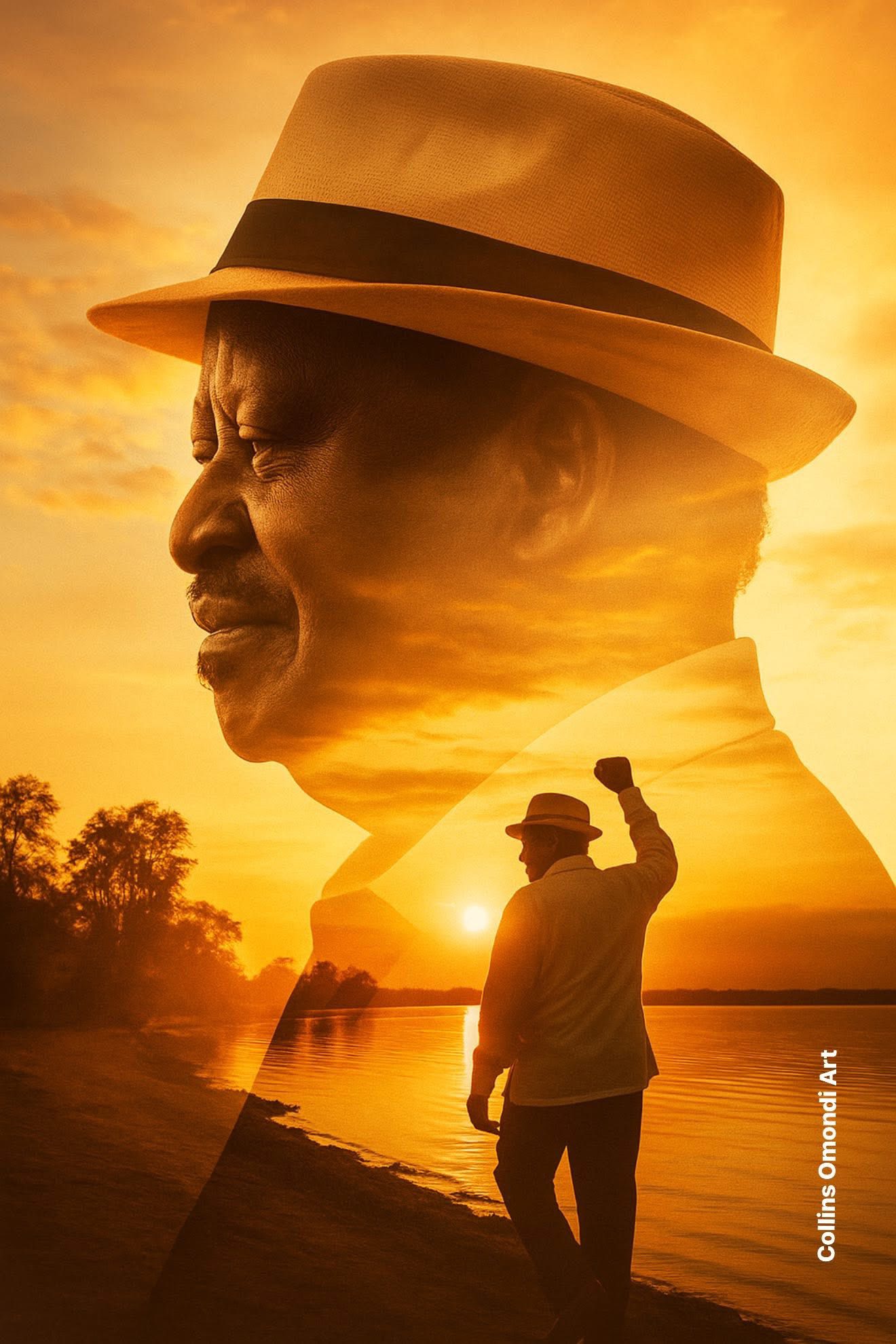
When Kenyan artist Collins Omondi Okello released his orange-hued portrait of the late Raila Odinga, the image spread like wildfire. Its celestial tones, depicting Raila’s face “mystically towering amidst the heavens,” struck an emotional chord with millions. Yet behind the tribute’s viral success lies a familiar story: one of artistic recognition, digital ethics, and copyright in the age of social media.
When Kenyan artist Collins Omondi Okello released his orange-hued portrait of the late Raila Odinga, the image spread like wildfire. Its celestial tones, depicting Raila’s face “mystically towering amidst the heavens,” struck an emotional chord with millions. Yet behind the tribute’s viral success lies a familiar story: one of artistic recognition, digital ethics, and copyright in the age of social media.
The Power and the Pitfall of Virality
Okello, a self-taught sketch artist known for his intricate pencil drawings, created the artwork as a personal tribute. He did not intend to profit from Raila’s passing. But within hours, the image had been turned into posters, T-shirts, and digital tributes across social media, often without his watermark or acknowledgment.
While Okello clarified that he has “no problem” with people using his work to make a living, his main request was simple: credit the artist. That acknowledgment, he said, “helps market me to potential clients and allows me to sustain myself economically.”
In a world where an image can be downloaded, reshared, and commercialized within minutes, the line between admiration and appropriation has never been thinner. Okello’s appeal is not about greed; it is about respect, visibility, and sustainability for creators.
Understanding Copyright: The Artist’s Shield
Under Kenya’s Copyright Act (2001), as in most jurisdictions, an artist automatically owns the copyright to their work the moment it is created, without needing registration. This gives the creator exclusive rights to:
- Reproduce the work in any form (digital, print, etc.)
- Distribute or sell copies
- Display or perform the work publicly
- License others to use the work commercially
When others crop out a watermark or reuse artwork without permission, they violate these rights, even when the intent seems innocent or “in honor” of the artist’s subject.
Okello’s case is a real-world example of copyright infringement through digital misuse. While he chose a gracious path of forgiveness and appeal, many artists might pursue legal remedies available under copyright law.
How Artists Can Protect and Benefit from Copyright
1. Keep the watermark on.
A simple watermark can serve as both a moral reminder and a legal identifier. It helps prove authorship if disputes arise.
2. Use digital fingerprinting or blockchain registration.
Platforms now exist that allow creators to timestamp and track usage of their art through digital identifiers, making it easier to monitor misuse.
3. License works properly.
Artists can use tools like Creative Commons licenses to clearly state what others may or may not do with their content. For example, “Non-Commercial, Attribution Required” licenses allow sharing but prevent sales without consent.
4. Seek legal recourse when necessary.
Under Kenyan law, artists can file complaints with the Kenya Copyright Board (KECOBO) or pursue civil claims for compensation and injunctions against misuse.
5. Build community awareness.
Artists and content creators can educate their followers about copyright, turning fans into advocates who help preserve creative rights.
From Art to Policy: Strengthening Africa’s Copyright Landscape
Okello’s story is not unique. Across the continent, digital creators, photographers, musicians, and designers face similar struggles: their works go viral, but their names disappear. This is not just a creative issue; it is a data governance and digital economy issue.
For Africa to nurture its creative industries, copyright systems must evolve to protect and empower artists. Governments and regional bodies can take several key steps:
1. Modernize copyright laws for the digital era.
Many African copyright laws predate social media and AI. Updating them to address online infringement, digital watermarking, and platform liability is essential.
2. Strengthen collective management organizations (CMOs).
Artists should be able to license, monitor, and receive royalties efficiently through well-governed CMOs with transparent revenue distribution.
3. Encourage digital literacy and creative education.
Public awareness campaigns can help citizens understand that sharing art respectfully is part of building a thriving creative economy.
4. Support regional harmonization.
Bodies like the African Union (AU) and ARIPO can foster shared copyright standards, ensuring artists are protected across borders.
5. Incentivize platforms to act responsibly.
Social media companies should be required to enforce attribution and anti-piracy measures, particularly when African content is used globally.
A Call for Digital Respect
Collins Okello’s request was modest: keep his name visible. Behind it lies a profound truth that recognition is the currency of creativity.
For Africa’s creative economy to flourish, artists need not just inspiration, but institutional protection, public awareness, and platform accountability. Only then will viral moments translate into sustainable livelihoods, and art like Okello’s continue to inspire generations with both meaning and respect.