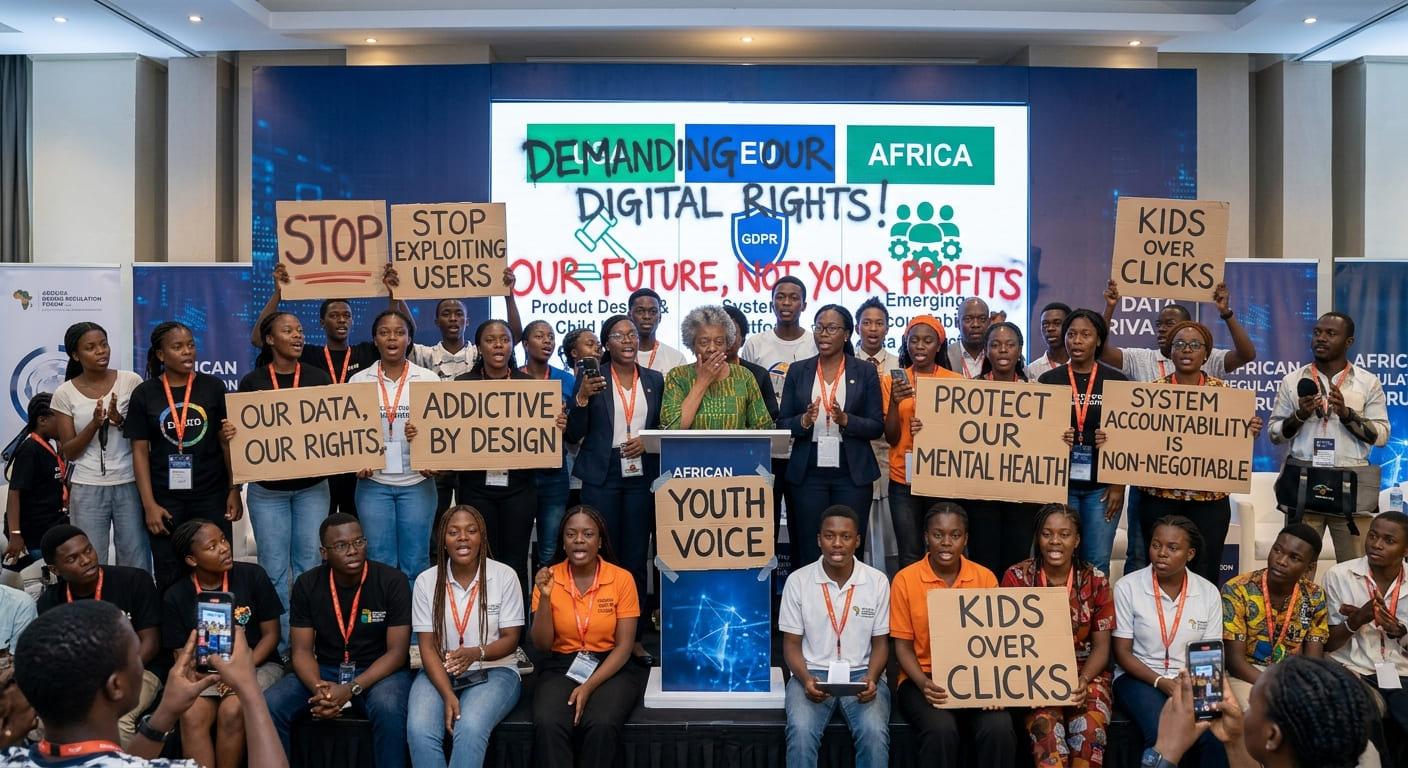
The legal battle over Meta’s treatment of children is becoming more than a dispute about social media. It is becoming a test of a broader proposition: can a technology company be held legally responsible not only for what users do on its platform, but for how the platform itself is designed?
That question is at the centre of the landmark litigation unfolding in the United States. In New Mexico, Meta was hit with a $942 million judgment following findings concerning misleading practices and harms to children. Meanwhile, a federal trial involving a coalition of 29 states began in Oakland in August 2026, with prosecutors alleging that Facebook and Instagram were deliberately designed to maximise engagement among children and teenagers while Meta failed to adequately address known risks. A federal judge had already allowed claims involving deceptive and unfair practices and COPPA to proceed, and ruled that Meta failed to comply with COPPA’s notice and parental-consent requirements.
The significance extends beyond the United States.
For African regulators, policymakers and data protection practitioners, the Meta litigation raises an important question: what happens when the harms associated with addictive design, algorithmic profiling and child-targeted engagement are examined through African legal frameworks?
The answer is unlikely to be a simple replication of the American model. Africa does not have a single regulatory approach to Big Tech. Instead, accountability is emerging through a combination of data protection laws, consumer protection, telecommunications regulation, child-protection frameworks, cybersecurity laws and, in some jurisdictions, more direct state control over online platforms.
The result is a different but potentially powerful route to platform accountability.
Table of Contents
- 1. The Legal Paradigm Is Shifting
- 2. Africa’s Route to Platform Accountability Is Different
- 3. Kenya: From Data Protection to Design Accountability
- 4. Uganda: Data Protection Meets Stronger State Regulation
- 5. Rwanda: Privacy, Profiling and Child Data
- 6. Nigeria: A More Direct Platform-Governance Model
- 7. South Africa: The Most Interesting Litigation Possibility?
- 8. The African Model Is Not One Model
- 9. The “Neutral Platform” Argument Is Becoming Less Comfortable
- 10. Data Protection Could Become Africa’s “Back Door” to Algorithmic Accountability
- 11. From DPIAs to “Design Impact Assessments”
- 12. The Risk of Importing the Wrong Regulatory Model
- 13. What Platforms Should Be Doing Now
- 14. What Regulators Should Be Asking
- 15. The Next Frontier: African Digital Product Liability
- Conclusion: Africa Does Not Need a Section 230 to Have a Platform Accountability Problem
1. The Legal Paradigm Is Shifting
For years, the central legal question surrounding internet platforms was whether they should be treated as neutral intermediaries for content created by their users.
The emerging litigation asks a different question:
What if the harm is partly a consequence of the platform’s own design?
That distinction is crucial.
A platform may not have created a particular piece of harmful content. But it may have designed the recommendation system that repeatedly delivers the content, the notification system that brings the user back, the infinite-scroll function that removes natural stopping points, or the profiling system that determines what the user sees next.
This is the foundation of the emerging product-design theory.
In the Oakland litigation, the states allege that Meta deliberately designed Facebook and Instagram to encourage prolonged engagement among young users and concealed information about the associated risks. The case also includes allegations concerning the collection of data from children under 13. Meta disputes the allegations and argues that the evidence has been taken out of context and that its platforms are not responsible for the harms alleged.
This represents a significant conceptual departure from traditional intermediary-liability debates. The question is no longer simply “Should the platform be liable for this user’s post?” It becomes “Should the platform be accountable for the system it deliberately engineered?”
That distinction could have major implications for African digital regulation.
2. Africa’s Route to Platform Accountability Is Different
African jurisdictions generally do not possess an exact equivalent of the American Section 230 framework.
Consequently, the legal battle is not necessarily about finding an exception to a broad statutory immunity. Instead, regulators and litigants can potentially rely on obligations that already exist within data protection, consumer protection, telecommunications and child-protection frameworks.
This creates an important distinction. In the United States, the emerging strategy can be described as:
In many African jurisdictions, the pathway may instead be:
That does not mean African law automatically makes platforms liable for psychological harm caused by social media. It means that some African regulatory systems already provide mechanisms for examining the data practices and design choices behind digital products.
3. Kenya: From Data Protection to Design Accountability
Kenya provides one of the clearest examples of how data protection regulation can intersect with platform design.
The Data Protection Act, 2019 establishes obligations around lawful processing, profiling, automated decision-making and the protection of data subjects. These obligations become particularly relevant when platforms use personal information to personalise feeds, predict behaviour or optimise engagement.
The Communications Authority of Kenya has also developed Industry Guidelines for Child Online Protection and Safety. The Guidelines apply across the ICT product and service value chain and expressly address the design, development, deployment, marketing and use of ICT products and services accessible to or targeted at children. Their objectives include identifying, preventing and mitigating adverse impacts of products and services on children’s rights and promoting safer products and services.
This is significant. The regulatory question can therefore move beyond “Did the platform collect a child’s information lawfully?” to “Was the product designed and operated in a manner that adequately protects children?” That is conceptually much closer to the emerging American product-design litigation.
The Kenyan opportunity
Kenya’s framework could potentially be used to scrutinise:
- profiling of children and teenagers;
- recommendation systems based on behavioural data;
- excessive collection of children’s personal information;
- age-assurance mechanisms;
- targeted advertising;
- automated decision-making;
- dark patterns and manipulative interfaces;
- retention and sharing of children’s data; and
- inadequate safeguards for vulnerable users.
The CA Guidelines are particularly notable because they extend beyond traditional privacy compliance and expressly contemplate the design and development of safer ICT products and services.
For platforms operating in Kenya, “privacy by design” and “child safety by design” therefore increasingly need to be considered together.
4. Uganda: Data Protection Meets Stronger State Regulation
Uganda’s Data Protection and Privacy Act, 2019 provides rights relating to personal data, including protections concerning automated decision-making. The Personal Data Protection Office states that the Act applies not only to entities processing data within Uganda but also, in certain circumstances, to entities outside Uganda processing data relating to Ugandan citizens.
Uganda’s model, however, illustrates why African platform regulation cannot be reduced to a simple “African GDPR” narrative. Digital governance in Uganda also intersects with cybersecurity, communications regulation and broader state interests in online content and platform activity.
This means that a platform operating in Uganda may face risks from several directions simultaneously:
- data protection enforcement;
- cybersecurity obligations;
- communications regulation;
- content restrictions; and
- government demands concerning online activity.
The regulatory risk is therefore broader than the product-liability question being litigated in the United States.
5. Rwanda: Privacy, Profiling and Child Data
Rwanda’s Law No. 058/2021 relating to the Protection of Personal Data and Privacy provides another important example.
The law expressly defines profiling as automated processing used to evaluate or predict aspects of an individual’s behaviour, preferences, interests, location or movements. It also contains specific protection for children’s personal data: where a controller knows that personal data belongs to a child under 16, parental consent is generally required, subject to statutory exceptions.
This matters for algorithmic platforms. A social-media recommendation engine may not simply “show content.” It can process information about a user’s behaviour, interests, interactions and preferences to predict what will keep that user engaged.
That makes profiling rules highly relevant to the architecture of modern social media. The African regulatory conversation should therefore move beyond asking whether a platform has a privacy policy. It should ask: what is the platform learning about children, how is it using that information, and what decisions does the system make because of that information?
6. Nigeria: A More Direct Platform-Governance Model
Nigeria presents a particularly interesting contrast.
Its data protection framework operates alongside broader rules governing interactive computer services and internet intermediaries. Nigeria’s regulatory approach has increasingly focused on platform responsibilities rather than treating online services simply as passive conduits.
This creates an environment in which issues such as child safety, harmful content, platform accountability, local regulatory presence and systemic online risks can be addressed through regulatory mechanisms rather than waiting for a conventional tort action.
Nigeria’s experience demonstrates that African governments do not necessarily need to reproduce American litigation strategies to impose meaningful responsibilities on global platforms. They can regulate the system itself.
7. South Africa: The Most Interesting Litigation Possibility?
South Africa may present one of the continent’s most interesting environments for future litigation concerning harmful platform design.
Its constitutional framework gives children’s interests significant legal protection. Section 28 of the Constitution provides that children’s best interests are of paramount importance in every matter concerning the child and protects children from maltreatment, neglect, abuse and degradation.
South Africa’s Protection of Personal Information Act (POPIA) also contains specific provisions concerning children’s personal information. Section 34 generally prohibits processing personal information concerning a child, subject to the exceptions in section 35, including prior consent from a competent person and certain statutory exceptions.
POPIA additionally regulates automated decision-making and cross-border information flows.
These protections could become increasingly relevant to algorithmic platforms. However, it would be premature to say that South African law already treats social-media algorithms as “defective products” in the same way that a defective physical product might be treated.
The stronger argument is that South Africa possesses multiple legal building blocks that could support future litigation around harmful digital design. Those building blocks include:
- constitutional child rights;
- privacy and data protection;
- consumer protection;
- common-law delictual principles;
- administrative regulation; and
- statutory protections for children’s personal information.
Whether these principles can ultimately produce a Meta-style product-liability case would depend on the facts, causes of action and judicial development of the law.
8. The African Model Is Not One Model
The continental picture becomes clearer when these jurisdictions are placed side by side.
| Issue | United States | European Union | Emerging African Approach |
|---|---|---|---|
| Primary regulatory concern | Product design, consumer protection and child safety | Data protection + systemic platform risks | Data protection, child safety, consumer protection and communications regulation |
| Algorithmic accountability | Product-design and state consumer-protection litigation | GDPR automated processing + DSA obligations | Profiling, automated decision-making and sector-specific regulation |
| Children’s data | COPPA + state laws | GDPR Article 8 + DSA | National child-data provisions vary significantly |
| Platform responsibility | Increasingly tested through litigation | Increasingly embedded in regulation | Primarily regulatory, with litigation potential developing |
| Enforcement | Attorneys general, courts and private plaintiffs | DPAs + European Commission + courts | DPAs, telecom regulators, consumer authorities and courts |
| Principal risk | Damages + structural remedies | Fines + compliance + systemic-risk obligations | Fines, directives, restrictions, licensing consequences and potentially civil liability |
The critical point is that Africa should not be viewed merely as importing the American or European approach. African regulators are developing their own combinations of tools.
9. The “Neutral Platform” Argument Is Becoming Less Comfortable
One of the most important lessons from the Meta litigation is the declining usefulness of the idea that a platform is merely a neutral host.
A platform that simply stores user content is legally different from a platform that:
- collects behavioural data;
- builds psychological profiles;
- predicts user preferences;
- ranks content algorithmically;
- recommends particular content;
- sends notifications designed to bring users back;
- monetises the resulting engagement; and
- continuously optimises the system based on observed behaviour.
The more active the platform’s role becomes, the harder it may be to characterise the platform solely as a passive intermediary.
This does not mean African regulators should automatically declare algorithms unlawful. It means that the legal analysis should increasingly examine the architecture of the service, not only the content circulating through it.
10. Data Protection Could Become Africa’s “Back Door” to Algorithmic Accountability
This may ultimately be the most important lesson.
African regulators may not need to create an entirely new category of “social-media product liability” to scrutinise harmful platform design. Existing data protection principles can already reach deep into algorithmic systems.
Consider a hypothetical platform used by millions of African teenagers. If that platform profiles young users, monitors their behaviour, predicts their vulnerabilities or interests, uses those predictions to personalise content, optimises the system for prolonged engagement, and uses the resulting data for advertising, the regulatory conversation can begin with familiar questions:
- Was the processing lawful?
- Was the purpose legitimate and sufficiently defined?
- Was the collection necessary and proportionate?
- Was the user adequately informed?
- Was profiling lawful?
- Were children’s rights adequately considered?
- Was a high-risk processing activity subjected to appropriate assessment?
These questions may not produce a $942 million judgment. But they can produce something equally important from a compliance perspective: regulatory leverage over the design of the product itself.
11. From DPIAs to “Design Impact Assessments”
This creates an opportunity for African regulators and organisations to evolve the concept of the Data Protection Impact Assessment.
A DPIA should not become a document completed after the product has already been designed. For platforms likely to be used extensively by children, organisations should consider assessing the following.
Data risks
What personal information is being collected?
Profiling risks
What behavioural characteristics are being inferred?
Algorithmic risks
How does the recommendation system determine what users see?
Engagement risks
Does the design deliberately encourage prolonged or compulsive use?
Child-rights risks
Could the product expose children to exploitation, inappropriate content or harmful interactions?
Commercial risks
Are children being profiled or targeted for advertising?
Governance risks
Who is responsible for monitoring and correcting harmful outcomes?
This would move privacy compliance closer to responsible product governance.
12. The Risk of Importing the Wrong Regulatory Model
There is, however, a danger in assuming that every African country should simply copy the United States or European Union.
The African digital environment is different. Many African markets have:
- younger populations;
- rapidly increasing smartphone adoption;
- lower levels of digital literacy;
- significant disparities in parental supervision;
- limited regulatory resources;
- cross-border platforms with little local infrastructure; and
- different approaches to freedom of expression and state power.
Consequently, an enforcement model focused exclusively on massive litigation may be impractical.
For many African regulators, prevention may be more valuable than litigation. A regulator that can require safer design before millions of children are exposed to a harmful system may achieve more than a court that awards damages years later.
13. What Platforms Should Be Doing Now
For technology companies operating across Africa, the lesson is straightforward: do not treat data protection, child safety and product design as separate compliance functions. They increasingly overlap.
Platforms should consider:
1. Build child safety into product development
Child safety should be addressed during product design rather than after deployment.
2. Review recommendation algorithms
Organisations should identify whether recommendation systems can amplify harmful content or encourage excessive engagement among minors.
3. Strengthen age assurance
Simple self-declared birth dates may not be sufficient where the platform presents significant risks to children.
4. Minimise children’s data
The safest child profile is often the one containing the least unnecessary personal information.
5. Assess profiling
Organisations should understand exactly what behavioural information is being inferred about young users and why.
6. Document design decisions
Internal records may eventually become important evidence of whether a company identified a foreseeable risk and what it did about it.
7. Establish escalation mechanisms
Child-safety incidents should reach people with authority to change the product, not merely customer-service teams.
14. What Regulators Should Be Asking
The Meta litigation also offers African regulators a useful set of questions.
Instead of asking only “Does this platform comply with the Data Protection Act?”, regulators could increasingly ask “How does this platform work?” That question opens a much broader regulatory examination.
Regulators should consider asking:
- What data feeds the recommendation algorithm?
- How does the system rank content for minors?
- What behavioural signals are collected?
- How are children identified?
- What safeguards apply when age is uncertain?
- Are minors profiled for advertising?
- What mechanisms prevent harmful engagement loops?
- How does the company measure child-safety outcomes?
- What internal research exists concerning identified risks?
- Who has authority to change harmful product features?
These questions move regulation from paper compliance to operational accountability.
15. The Next Frontier: African Digital Product Liability
The most significant long-term question is whether African courts will eventually develop a jurisprudence around harmful digital products.
It is too early to predict a continent-wide “Meta moment.” But the ingredients are emerging.
Data protection laws increasingly regulate profiling and automated decision-making. Child-protection frameworks impose heightened duties toward minors. Consumer-protection regimes provide additional avenues of accountability. Constitutional systems in several jurisdictions recognise children’s rights and dignity. Telecommunications regulators increasingly examine the behaviour of digital service providers.
The legal systems therefore already contain several pieces of the puzzle. What is missing is the jurisprudential connection between them.
A future case could ask: when an algorithmically designed digital service foreseeably causes harm to children, where does responsibility lie? Is it a data protection violation, a consumer protection violation, a breach of statutory duty, negligence, a constitutional rights issue, a child-protection failure, or, eventually, a form of digital product liability?
The answer may vary from country to country.
Conclusion: Africa Does Not Need a Section 230 to Have a Platform Accountability Problem
The Meta litigation demonstrates that the future of Big Tech regulation may not be determined solely by what platforms host. It may increasingly be determined by what platforms build.
The United States is testing this proposition through litigation alleging addictive design, deceptive practices and unlawful collection of children’s data. Europe has pursued a more regulatory model through data protection and systemic platform obligations.
Africa is developing a third path. Across the continent, data protection authorities, telecommunications regulators, consumer-protection bodies and courts are gaining tools capable of examining how digital platforms collect data, profile users, target children and design their services.
The critical opportunity is to connect these tools. Africa does not necessarily need to wait for a billion-dollar lawsuit before addressing harmful platform design. A well-designed regulatory framework can intervene earlier through privacy by design, child-rights impact assessments, DPIAs, algorithmic accountability, age assurance and meaningful enforcement.
The real shift, therefore, is not from Section 230 to product liability. It is from content accountability to system accountability.
And for Africa’s rapidly expanding digital economy, that may prove to be the more important legal transformation.
This article is intended for general information and discussion and should not be taken as legal advice. The application of the laws discussed will depend on the specific jurisdiction, facts and regulatory context.